Florida is a wild, watery wonderland and the only place on the planet where you can find alligators and crocodiles sharing the same neighborhood. Whether you’re a local or just visiting, understanding these ancient neighbors is part of the true Florida experience.
American Alligator
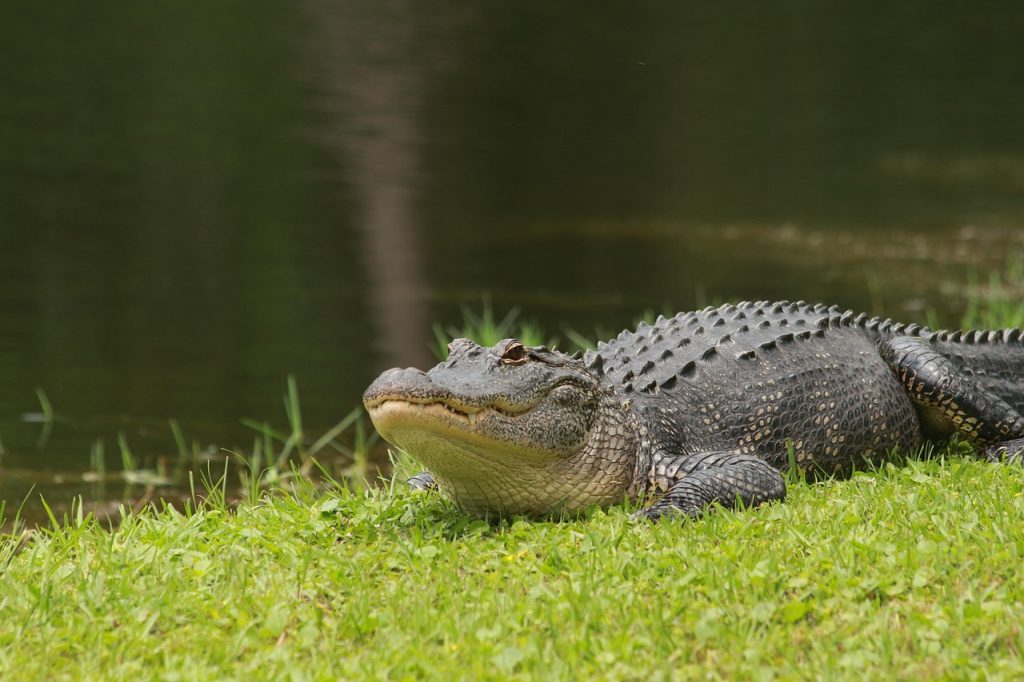
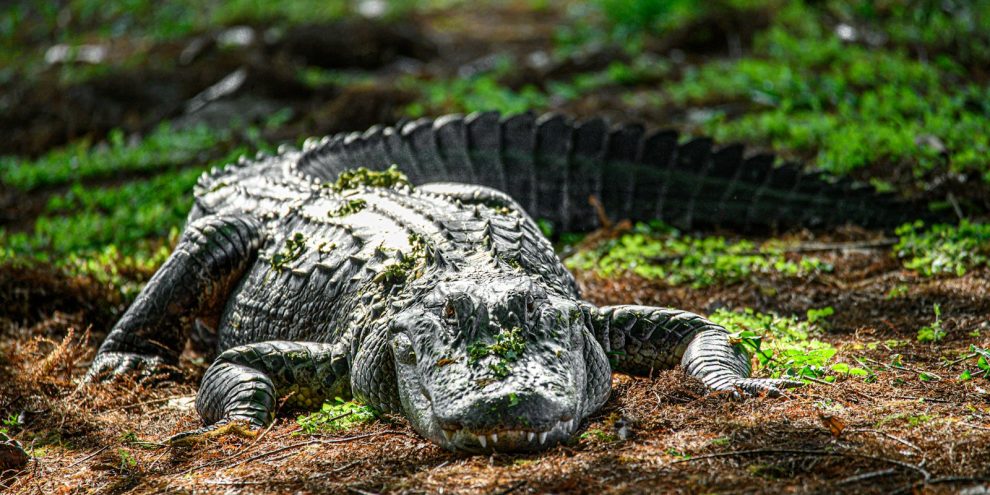
The American alligator (Alligator mississippiensis) is arguably Florida’s most recognizable reptile. Once teetering on the brink of extinction due to overhunting and habitat loss, its remarkable recovery is a shining example of conservation success. Listed as endangered in 1973, robust protection efforts led to its removal from the list in 1987. Today, an estimated 1.3 million alligators thrive across Florida, a testament to their resilience.
You can find them in virtually any freshwater body, from the smallest backyard pond to the largest rivers. We have an expression in Florida, “if you are near water, you are near a gator.”
Habitat and Lifestyle
Alligators are primarily freshwater dwellers, preferring lakes, rivers, swamps, and marshes. While they can tolerate brackish water for short periods, they are less common in truly saline environments. They play a crucial role as “ecosystem engineers,” digging “gator holes” that retain water during dry seasons, providing vital refuges for fish and other wildlife. They are opportunistic predators, feasting on fish, turtles, snakes, small mammals, and birds.
Conservation Status
Although no longer endangered, alligators remain federally protected due largely to their visual similarity to the still-threatened American crocodile. This “Similarity of Appearance” clause prevents accidental harm to the more vulnerable species.
Top Alligator “Hotspots” Across the State
Alligators are found in all 67 Florida counties, but these locations offer the highest concentrations:
- Everglades National Park: This is the heavyweight champion, holding the highest concentration of alligators in the state. It’s a massive 1.5-million-acre “River of Grass” where gators act as essential ecosystem engineers.
- Shark Valley: A 15-mile loop in the Everglades where you can bike or take a tram past dozens of gators sunning right next to the path.
-
St. Johns River: At 310 miles long, this is Florida’s most alligator-filled river, with a count of over 5,100 gators.
-
Myakka River State Park: Famous for the “Deep Hole,” a sinkhole where hundreds of alligators congregate during the dry season.
-
Lake George & Lake Kissimmee: These lakes consistently top the charts, with thousands of gators calling their shallow banks home.
Coastal Crocs
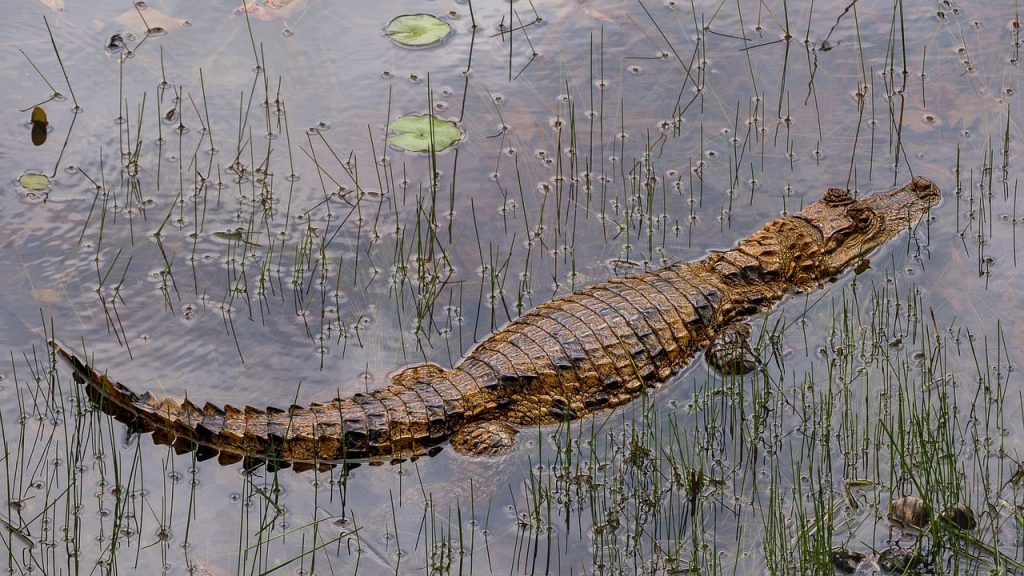
In stark contrast to the abundant alligator, the American crocodile (Crocodylus acutus) is a much rarer and more specialized resident. Florida represents the northernmost extent of their range, which stretches down through the Caribbean, Central America, and northern South America.
While alligators are the state’s famous freshwater residents, the American crocodile is the sophisticated, saltwater-loving cousin found along Florida’s southernmost shores. They are a true conservation triumph, having rebounded from just a few hundred individuals in the 1970s to a thriving population of about 2,000 adults today.
Appearance and Habitat: Crocodiles can be distinguished from alligators by their lighter grayish-green coloration, a more pointed V-shaped snout, and the prominent fourth tooth on their lower jaw that remains visible when their mouth is closed. Unlike alligators, crocodiles prefer coastal, brackish, and saltwater environments like mangrove swamps, estuaries, and lagoons.
Location and Status: In Florida, American crocodiles are almost exclusively found in the extreme southern tip of the state, including the Florida Keys, Biscayne National Park, and the southern Everglades. Their population, once severely depleted, has slowly rebounded to around 2,000 adults, but they remain listed as a “threatened” species, facing ongoing challenges from habitat loss and human encroachment.
Where to Spot Them
Unlike alligators, which are found statewide, crocodiles are specialists that stick to the coastal, brackish, and saltwater environments of South Florida.
-
Everglades National Park: The only place on Earth where you can see both alligators and crocodiles living side-by-side in the wild. Check out the Flamingo area for some of the best viewing.
-
Crocodile Lake National Wildlife Refuge: Located in North Key Largo, this refuge is a premier protected nesting ground for nearly a quarter of the U.S. crocodile population.
-
Biscayne National Park: These “coastal crocs” frequent the mangrove-lined bays and creeks here.
-
Turkey Point: This power plant in South Florida serves as a surprisingly successful managed nesting habitat for the species.
What Makes Them Unique?
If you see a large reptile in South Florida, here is how you can tell if it’s a coastal crocodile:
-
The Snout: They have a narrow, V-shaped snout, whereas alligators have a broad, U-shaped one.
-
The Teeth: When their mouth is closed, you can see both their upper and lower teeth, including a prominent fourth tooth on the bottom jaw.
-
Coloration: Adults are a lighter grayish-green or tan, blending in perfectly with sandy or muddy shorelines, unlike the much darker, almost black alligator.
-
Size: They can get massive. While most wild males are around 14 feet, they have the potential to reach up to 20 feet.
Temperament and Behavior
Despite their size and fierce look, American crocodiles are remarkably shy and reclusive.
-
Not the “Aggressor”: Unlike the more famous Nile or Saltwater crocodiles, the American variety is secretive and rarely aggressive toward humans.
-
The “Gape”: You’ll often see them sunning with their mouths wide open—this is called “gaping” and is just their way of cooling off, not an aggressive display.
-
Salt Lovers: They have specialized salt glands that allow them to thrive in the ocean, a feature alligators lack.
Conservation Status
The American crocodile’s status has improved from “Endangered” to “Threatened”. While they are making a great comeback, they still face modern threats like vehicle strikes, habitat loss due to coastal development, and the increasing intensity of hurricanes.
The Best Spots to See Both Alligators and Crocodiles in One Day
If you’re on a mission to see both in a single outing, head to the southern tip of the Florida peninsula.
-
Flamingo Marina (Everglades National Park): This is widely considered the best spot for a “two-for-one” sighting. American crocodiles are frequently seen sunning on the boat ramps or swimming in the marina. Meanwhile, alligators are often found just a short distance away in the freshwater ponds and canals along the Main Park Road.
-
Anhinga Trail: Located near the Royal Palm Visitor Center, this is arguably the best place for guaranteed alligator sightings. While crocodiles are rarer here, it’s only about an hour’s drive from the Flamingo area, making it easy to hit both spots in one day.
-
Everglades Alligator Farm: Just outside the national park, this farm houses over 2,000 alligators and also features American crocodiles and caimans on-site for guaranteed viewing.
The Spectacled Caiman
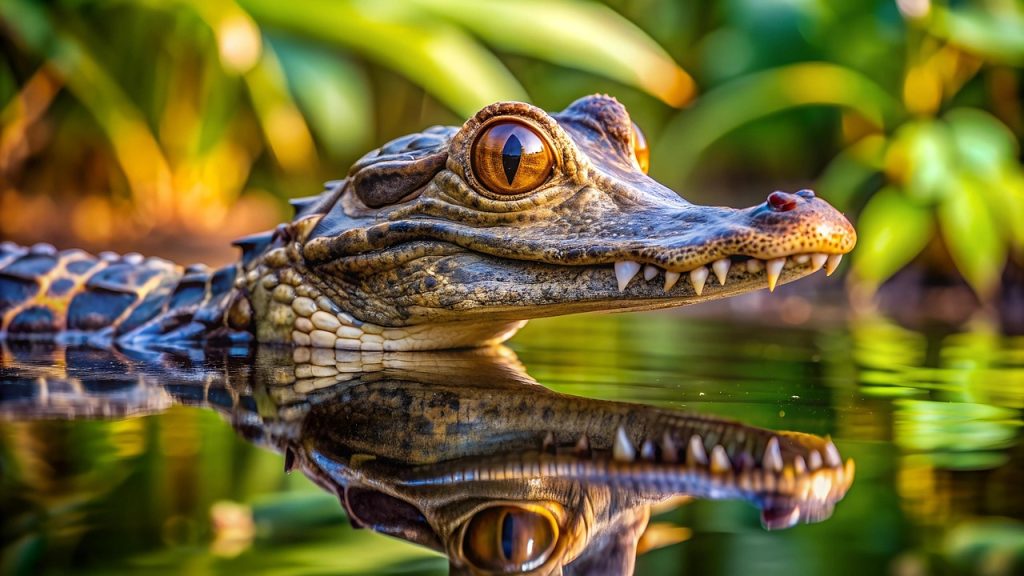
Adding a unique twist to Florida’s crocodilian narrative is the presence of the spectacled caiman (Caiman crocodilus). These smaller crocodilians are not native to Florida but were introduced through the exotic pet trade, primarily in the 1950s.
Appearance and Impact: Spectacled caimans possess a distinct bony ridge between their eyes, resembling spectacles. They are considerably smaller than native alligators and crocodiles, typically reaching lengths of only 5 to 8 feet. They primarily inhabit freshwater canals, lakes, and ponds in South Florida, particularly within Miami-Dade and Broward counties. As an invasive species, their presence raises concerns about potential competition with native wildlife for resources and habitat. Florida wildlife agencies actively manage their populations, including removal efforts, to mitigate their impact on the ecosystem.
How Did They Get Here?
Unlike the native species, spectacled caimans (Caiman crocodilus) were introduced to Florida via the pet trade in the late 1950s and 1960s. When baby alligators became illegal to sell, the industry imported thousands of young caimans as a substitute. Predictably, many grew too large for their tanks and were either released or escaped, particularly in the Miami area. Major events like Hurricane Andrew in 1992 also contributed by destroying cages at exotic animal dealerships, allowing more to escape into the wild.
Where They Live and Thrive
These “compact crocodilians” have carved out a specific niche in the state:
-
Territory: They are firmly established in South Florida, primarily within Miami-Dade and Broward counties.
-
Habitats: They love freshwater canals, lakes, and ponds, especially those with calm water and floating vegetation. You can also find them in parts of the Everglades and Big Cypress National Preserve.
-
Size Difference: A full-grown male caiman typically reaches 6.5 feet, while a female hits about 4.5 feet. Because of their size, they are often mistaken for juvenile alligators.
The Invasive Impact
The state isn’t rolling out the red carpet for these guys. As an invasive species, they pose several threats to Florida’s delicate balance. They occupy the same habitats as native alligators and crocodiles, competing for the same food and space. And they aren’t picky eaters. They prey on native fish, birds, small mammals, and even other reptiles, potentially impacting local populations.
The “Croc Docs” Fight Back
Good news: Researchers at the University of Florida (known as the “Croc Docs”) have seen significant success in managing these invaders.
-
Removal Programs: Through systematic surveys and “rapid response” to sightings, biologists have successfully removed hundreds of caimans.
-
Population Decline: Recent studies show that consistent removal efforts in specific Everglades restoration areas are working, with some believing they could even be locally extirpated (completely removed) from certain regions.
Keep an eye out in the canals of Miami-Dade and Broward counties for the spectacled caiman. They are smaller, invasive cousins that arrived via the pet trade and have made themselves quite at home in South Florida’s drainage systems.
Nile Crocodile
If you are hoping to spot a Nile crocodile in Florida, chances are, you probably won’t. Stories of the legendary Nile crocodile in Florida have sparked both scientific study and some wild urban legends.
These African behemoths are far larger and more aggressive than any native Florida crocodilian. Fortunately, these instances appear to be isolated cases of escaped or illegally released pets, and there is currently no evidence of a breeding population of Nile crocodiles in the state. Wildlife officials act swiftly to capture and remove any confirmed sightings to prevent the establishment of such a dangerous invasive species.
The Confirmed Sightings
Yes, there have been confirmed sightings of Nile crocodiles (Crocodylus niloticus) in Florida, though they are considered isolated incidents rather than a resident population.
-
The “Miami Trio”: Between 2009 and 2014, researchers captured three “unusual” crocodilians near Miami and Homestead. DNA testing confirmed they were Nile crocodiles closely related to populations in South Africa.
-
Growth and Survival: One of these captured individuals was found a year after its first release, having grown from 2.8 feet to 5.5 feet, proving they can thrive in Florida’s environment.
-
The “Billie Swamp” Escape: Another documented case involved a 4-to-5-foot Nile crocodile that escaped its enclosure at Billie Swamp Safari in the late 1990s. By the time it was recaptured in 2000, it had grown to nearly 10 feet long.
Are They Still Out There?
As of 2026, there is no scientific evidence of a breeding population or an established wild community of Nile crocodiles in Florida.
-
Current Status: Experts believe the few individuals found were likely illegally released or escaped pets.
-
The Threat: While no recent confirmed captures have been reported, biologists remain vigilant because Nile crocodiles are significantly more aggressive than native species and could theoretically interbreed with or outcompete native American crocodiles.
Myth vs. Reality
You might hear tall tales about 20-foot “man-eaters” lurking in the Everglades or hybrid “super-crocs” eating cattle.
-
The Reality: While Nile crocodiles in Africa can reach 20 feet and are responsible for many human deaths annually, the individuals found in Florida were relatively small and mostly eating largemouth bass.
-
No Hybridization: Despite local rumors, there is currently no verified scientific evidence of Nile crocodiles interbreeding with Florida’s native alligators or crocodiles in the wild.
Safety and Reporting
Because they look remarkably similar to the native American crocodile, they are hard for the average person to spot. They typically have a slightly broader, more bronze-colored snout and a different scale pattern on their backs.
Safety First: Living with Legends
Alligator attacks are incredibly rare, statistically, you’re more likely to be struck by lightning. However, they are powerful predators that deserve a healthy dose of respect!
-
Keep Your Distance: Always maintain at least 60 feet of space. If a gator hisses at you, you’ve definitely overstayed your welcome.
-
Sun-Up to Sun-Down: Alligators are most active between dusk and dawn, so save your swimming for broad daylight in designated areas only.
-
Protect Your Pets: Alligators see small animals as natural prey. Always keep your pets on a leash and away from the water’s edge.
The Law of the Land
Florida takes its crocodilians seriously. The laws are designed to keep both you and the animals safe:
-
Never Feed Them: This is the #1 rule. It is illegal to feed alligators or crocodiles. Feeding them makes them lose their natural fear of humans, which often leads to the animal being labeled a “nuisance” and euthanized.
-
Hands-Off Policy: It is a felony to intentionally kill, injure, capture, or possess an alligator (or their eggs) without a specific permit from the FWC.
-
Don’t Be a Bully: Harassing, throwing things at, or “molesting” an alligator is a misdemeanor punishable by fines and jail time.
Pro-Tip: If you see an alligator that seems a bit too comfortable around people or poses a genuine threat, don’t handle it yourself! Call the FWC Nuisance Alligator Hotline at 866-FWC-GATOR.
Florida’s crocodilians are ancient, powerful, and integral to the state’s natural environment. Observing them in their natural habitat is a thrilling experience, but always remember to maintain a safe distance and never feed these wild animals. Their continued survival depends on respect, understanding, and ongoing conservation efforts.