

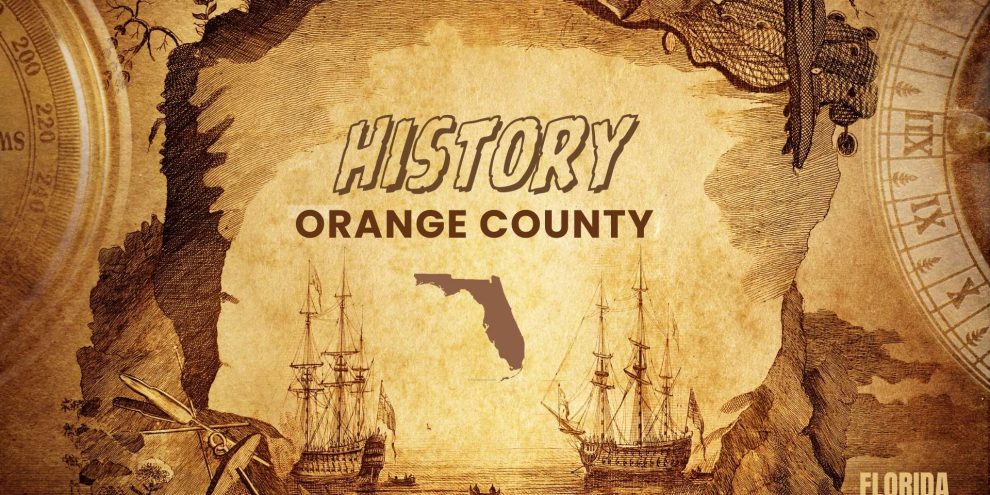
Orange County, located in central Florida, is one of the state’s most historically significant and economically vibrant regions. Known today for its world-famous theme parks, including Walt Disney World, Orange County has a rich history that spans Indigenous cultures, European colonization, agricultural development, and modern growth driven by tourism and innovation.
Indigenous Peoples and Early History
Pre-Colonial Era
The area now known as Orange County was originally inhabited by Indigenous peoples, including the Timucua and later the Seminole.
These groups lived off the land, relying on hunting, fishing, and gathering resources from the region’s rivers, lakes, and forests.
Seminole Presence
The Seminole people, a group formed from Creek migrants and Indigenous Floridians, became prominent in the area during the 18th and 19th centuries.
The Seminole Wars (1817–1858) between the U.S. government and the Seminole people shaped the region’s history, as the Seminole resisted forced removal.
19th Century: Settlement and Formation of Orange County
Early Settlement
After the Seminole Wars, settlers began moving into the area, drawn by its fertile land and natural resources.
Fort Gatlin, established in 1838 during the Second Seminole War, became a focal point for early settlement.
Formation of Orange County
Orange County was established on December 29, 1824, when Florida was still a U.S. territory.
It was named after the fruit that was a major crop in the region, symbolizing its agricultural potential.
The county originally covered a much larger area, including parts of present-day Seminole, Osceola, Lake, and Volusia counties.
County Seat: Orlando
Orlando, the county seat, was originally known as Jernigan, named after Aaron Jernigan, an early settler.
The city was renamed Orlando in 1857, and its origins are steeped in folklore, including a popular story about a soldier named Orlando Reeves.
20th Century: Growth and Development
Citrus Industry
Orange County became a major center for citrus production, with groves of oranges, grapefruits, and other fruits covering the landscape.
The citrus industry faced challenges, including freezes and diseases, but remained a cornerstone of the local economy.
Tourism and Disney’s Impact
The opening of Walt Disney World in 1971 transformed Orange County into a global tourist destination.
The theme park’s success spurred the development of other attractions, hotels, and businesses, making tourism the county’s leading industry.
Population Growth
Orange County experienced rapid population growth in the late 20th and early 21st centuries, driven by its affordability and proximity to Orlando.
The county became increasingly suburban, with new residential developments and infrastructure.
Modern Orange County
Economic Diversification
While tourism remains a key industry, Orange County has diversified its economy to include healthcare, technology, and manufacturing.
The county has invested in initiatives like the Central Florida Research Park, a hub for high-tech research and development.
Demographics
Orange County is one of the most diverse counties in Florida, with a large Hispanic population, particularly of Puerto Rican descent.
The county’s cultural diversity is reflected in its festivals, cuisine, and community organizations.
Education and Infrastructure
Orange County has made significant investments in education, including the construction of new schools and partnerships with higher education institutions.
Infrastructure projects, such as the expansion of highways and public transportation, have supported the county’s growth.
Challenges and Opportunities
Orange County faces challenges such as urban sprawl, traffic congestion, and affordable housing shortages.
However, its strategic location, diverse economy, and commitment to innovation position it for continued growth and development.
Key Cities and Towns
Orlando:
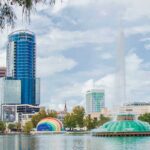
The county seat and largest city, known for its world-famous theme parks, vibrant cultural scene, and diverse population.
Winter Park:
A smaller city with a strong sense of community, known for its historic architecture, upscale shopping, and cultural attractions.
Apopka:
Known as the “Indoor Foliage Capital of the World,” Apopka is a center for agriculture and outdoor recreation.