

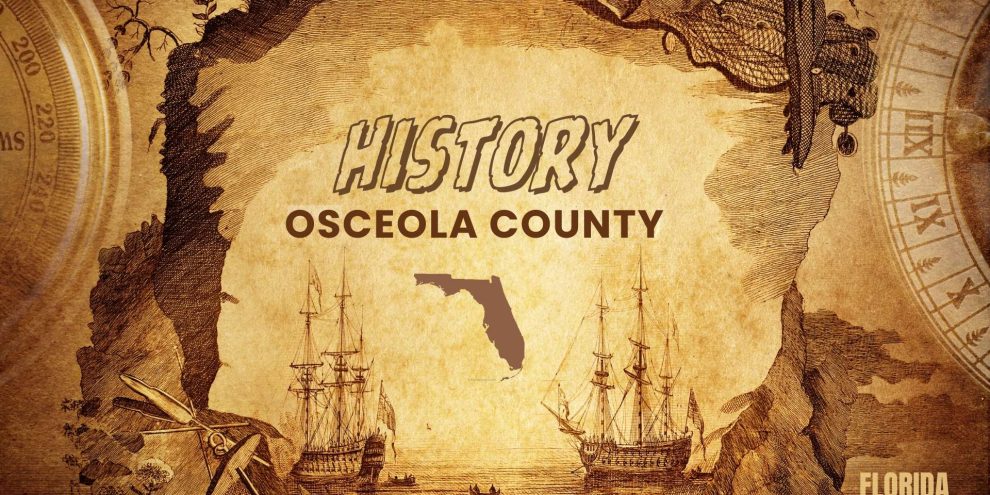
Osceola County‘s history is a blend of Indigenous heritage, agricultural roots, and modern growth driven by tourism and innovation. From its early days as a cattle ranching hub to its current role as a dynamic and diverse community, Osceola County continues to evolve while preserving its unique identity. Its strategic location and commitment to progrHistoress ensure that it will remain an important part of central Florida’s future.
Indigenous Peoples and Early History
Pre-Colonial Era
The area now known as Osceola County was originally inhabited by Indigenous peoples, including the Tocobaga, Calusa, and later the Seminole.
These groups lived off the land, relying on hunting, fishing, and gathering resources from the region’s rivers, lakes, and forests.
Seminole Presence
The Seminole people, a group formed from Creek migrants and Indigenous Floridians, became prominent in the area during the 18th and 19th centuries.
The Seminole Wars (1817–1858) between the U.S. government and the Seminole people shaped the region’s history, as the Seminole resisted forced removal.
19th Century: Settlement and Formation of Osceola County
Early Settlement
After the Seminole Wars, settlers began moving into the area, drawn by its fertile land and natural resources.
Cattle ranching and agriculture became the primary economic activities.
Formation of Osceola County
Osceola County was established on May 12, 1887, carved out of portions of Orange and Brevard counties.
It was named after Osceola, a prominent Seminole leader who resisted U.S. forces during the Second Seminole War (1835–1842).
County Seat: Kissimmee
Kissimmee, the county seat, was founded in the 1880s and became a hub for trade and transportation.
The arrival of the South Florida Railroad in 1885 connected Kissimmee to larger markets, spurring growth.
20th Century: Growth and Development
Cattle and Agriculture
Osceola County remained a center for cattle ranching and agriculture, with citrus farming also playing a significant role.
The county’s open grasslands and wetlands made it ideal for raising cattle.
Tourism and Disney’s Impact
The opening of Walt Disney World in neighboring Orange County in 1971 had a transformative effect on Osceola County.
Tourism became a major industry, with hotels, restaurants, and attractions catering to visitors.
The county’s proximity to Disney World and other Orlando attractions made it a popular destination for families and businesses.
Population Growth
Osceola County experienced rapid population growth in the late 20th and early 21st centuries, driven by its affordability and proximity to Orlando.
The county became increasingly suburban, with new residential developments and infrastructure.
Modern Osceola County
Economic Diversification
While tourism remains a key industry, Osceola County has diversified its economy to include healthcare, technology, and manufacturing.
The county has invested in initiatives like NeoCity, a high-tech research and development park focused on advanced manufacturing and innovation.
Demographics
Osceola County is one of the most diverse counties in Florida, with a large Hispanic population, particularly of Puerto Rican descent.
The county’s cultural diversity is reflected in its festivals, cuisine, and community organizations.
Education and Infrastructure
Osceola County has made significant investments in education, including the construction of new schools and partnerships with higher education institutions.
Infrastructure projects, such as the expansion of highways and public transportation, have supported the county’s growth.
Challenges and Opportunities
Osceola County faces challenges such as urban sprawl, traffic congestion, and affordable housing shortages.
However, its strategic location, diverse economy, and commitment to innovation position it for continued growth and development.
Key Cities and Towns
Kissimmee
The county seat and largest city, known for its historic downtown, proximity to Disney World, and vibrant cultural scene.
St. Cloud
A smaller city with a strong sense of community, known for its historic architecture and outdoor recreation opportunities.
Poinciana
A rapidly growing suburban community with a diverse population and affordable housing options.


